
MacGyver Auto Body & Collision

Frame Straightening Service in Richmond Hill

Frame Straightening Service in Richmond Hill

Frame straightening Richmond Hill is essential after many collisions. Even small impacts can twist the unibody or chassis just enough to affect handling, tire wear, and safety systems.
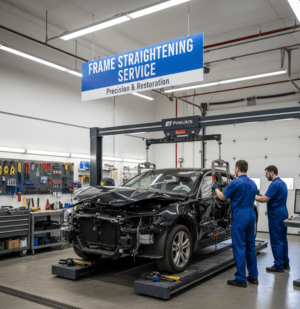
At MacGyver Auto Body & Collision, we use computerized measuring systems and dedicated benches for precise frame alignment and chassis straightening.
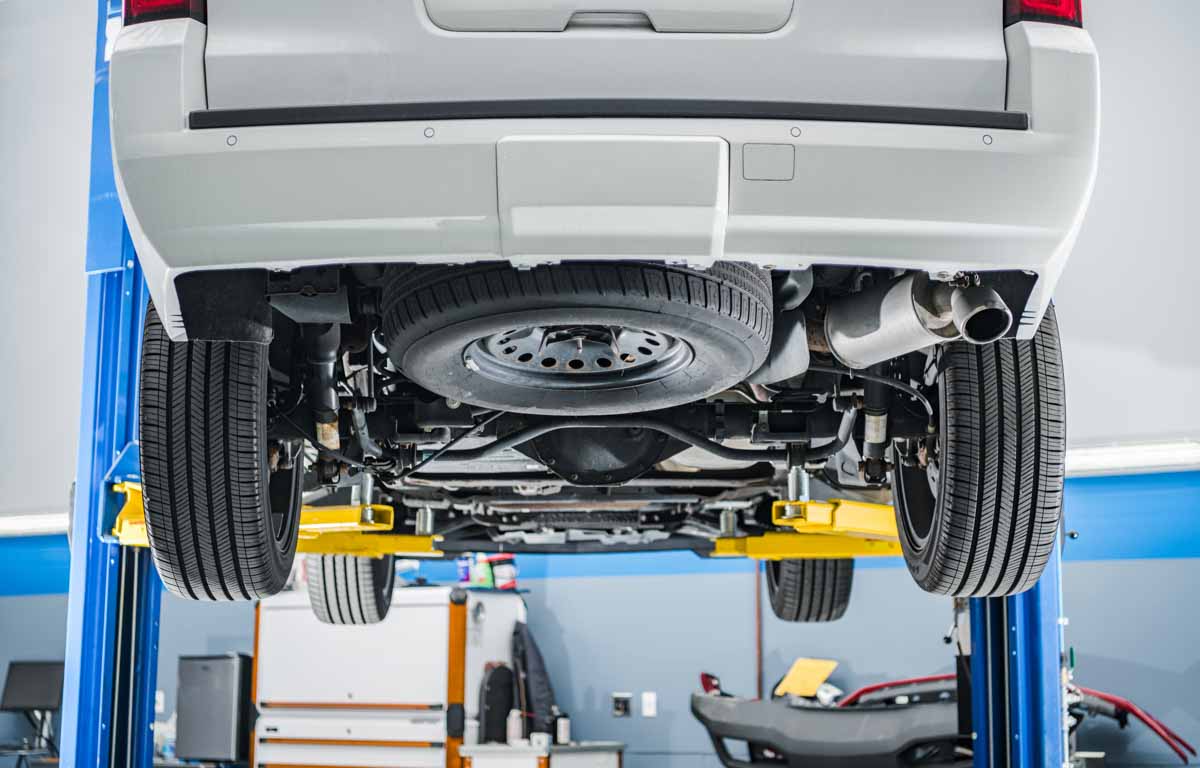
A Car on a Lift Inside Auto Service Shop
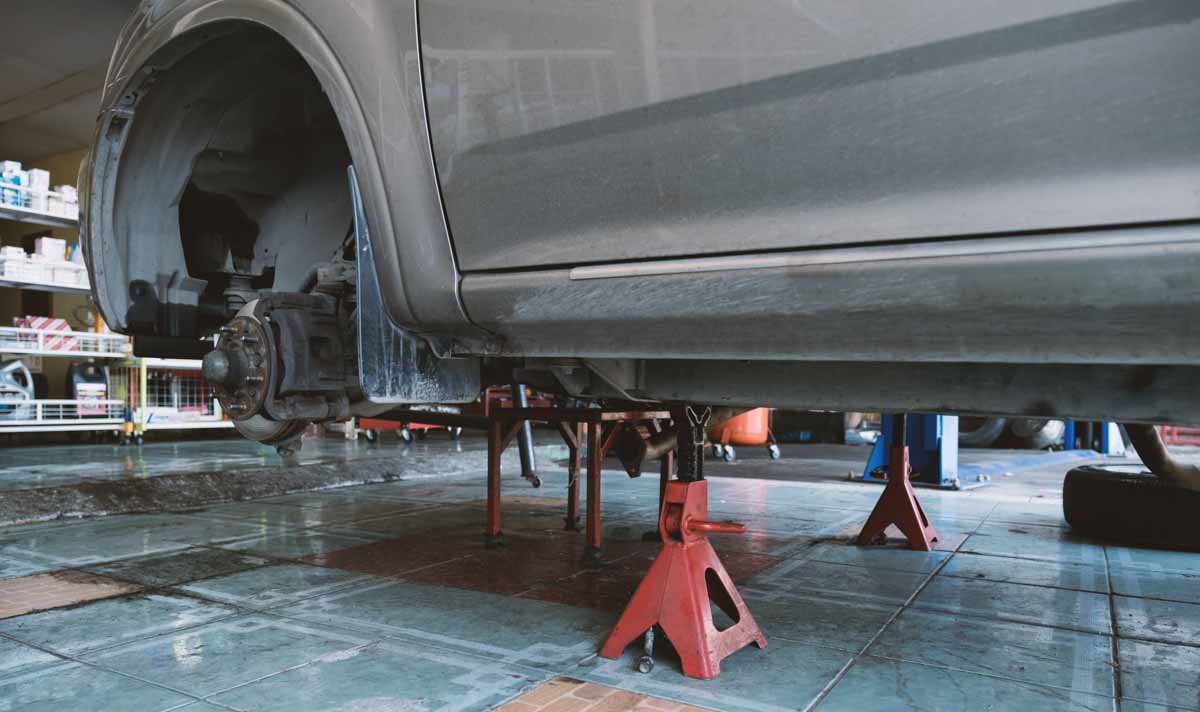
brake car disc rotor removed tire for change old disk, service n

Why Precision Matters

Whether you searched for frame straightening near me Richmond Hill or need a post-accident inspection, we deliver structural repair for cars that meets OEM specs. From light pulls to heavy frame repair, we verify datum points, correct cross-measurements, and document results for you and your insurer. Common signs include off-centre steering, uneven panel gaps, pulling to one side, vibrations, or doors/trunk that won’t latch smoothly. Schedule a frame alignment service Richmond Hill to prevent wear and safety risks.

Our 4 Step Repair Process
  • Free estimate & assessment — Visual inspection and measuring plan; we’ll also check suspension mounting points.
  • Computerized measuring — Identify twists, sags, diamonds, and mash damage with OEM reference data.
  • Corrective pulls — Hydraulic towers apply controlled pressure to return the structure to spec.
  • Collision frame repair — Straightening, welding or sectioning (where permitted) and corrosion protection.
  • Verification & alignment — Final measurements recorded; wheel alignment recommended as needed.
Gemini_Generated_Image_9v663s9v663s9v66-1-min
What We Do

• Precision frame straightening and unibody correction
• Computerized frame alignment with OEM measurement data
• Chassis straightening and rail repair
• Structural repair for cars including weld-in sectioning (where approved)
• Heavy frame repair and post-repair documentation for insurance

Get services
Frame straightening near you

Where can I get frame straightening near Richmond Hill?

MacGyver Auto Body & Collision in Richmond Hill, Ontario, does frame straightening and structural repair at 125 16th Avenue, Unit 2, just east of Yonge Street. We measure the structure by computer against the manufacturer’s reference data and give you the results in writing.

Frame work is one part of our complete collision repair in Richmond Hill. The same family-run auto body shop handles your vehicle from first measurement to paint matching. Tony, who owns the shop with his wife Sandra, has 48+ years of experience.

If you searched “frame straightening near me”, our service area covers Oak Ridges, Thornhill, Aurora, Newmarket, Markham, Vaughan, North York, Scarborough and Toronto. For high-value structural work, you can bring your vehicle from anywhere in Ontario. Send photos first, and ask about tow coordination within our service area when you book.

Find the shop

MacGyver Auto Body & Collision
125 16th Avenue, Unit 2 (back of building)
Richmond Hill, ON L4C 7A5

(905) 505-5858
After hours: (416) 839-3670

Monday to Friday, 8:00 AM to 6:30 PM
Saturday, 8:00 AM to 1:30 PM
Sunday closed

Google rating: 4.8 stars from 169 reviews (as of November 5, 2026).

Frame or unibody

What is the difference between a frame and a unibody?

A frame is a separate steel structure that the body bolts onto. A unibody has no separate frame, because the floor, pillars, roof and rails are built as one shell. People say “frame damage” for both, and we repair both.

Body-on-frame

Most pickups and many large SUVs are built this way. Two long rails joined by crossmembers carry the engine, suspension and cab. A hard hit can bend a rail or shift the body on its mounts. A recent F-150 pairs an aluminum body with a high-strength steel frame, so one crash can need both aluminum and frame repair.

Unibody

Most cars and crossovers are built this way. The whole shell shares the load, so the force of a crash can travel well past the spot that was hit. Front and rear rails are designed to fold and protect the cabin. That is why a corner hit on a unibody gets measured far from the visible damage.

What are the signs of structural damage after a collision?

The clearest signs are body gaps that no longer match from side to side, tires wearing on one edge and an alignment that won’t hold. Some cars show nothing at all. A plastic bumper cover can spring back into shape and hide a bent reinforcement or rail behind it.

If the steering, brakes or a wheel looks or feels wrong, treat the car as unsafe to drive. Our towing partners can bring it in by flatbed from local roads. In a restricted highway tow zone, only the authorized operator can tow you.

Get it measured if you notice

  • A wheel sitting further back in its opening than the one across from it
  • Cracked paint or seam sealer along a rail, pillar or strut tower
  • A rippled trunk floor after a rear-end hit
  • A windshield that cracked with no direct hit
  • Airbags that fired
Measuring

How do computerized measuring and datum points work?

Datum points are the reference locations a manufacturer sets for your exact vehicle, such as holes, bolts and mounting points on the underbody. With the vehicle on a dedicated bench, a computerized system reads where each point sits now and compares it with the manufacturer’s (OEM) reference data.

Cross-measurements then run corner to corner. On a square structure the opposite diagonals match, so unequal readings show the body has shifted even when it looks straight to the eye. The readings also name the kind of damage:

  • Twist: one corner sits high, the opposite corner low.
  • Sag: the middle of the structure has dropped.
  • Diamond: one side was pushed back, so the body is out of square.
  • Mash: a rail was shortened by a front or rear hit.

What the written record shows

Structural results are documented for you and for your insurer. Ask to see:

  • The datum points and cross-measurements that were checked
  • The OEM reference data they were compared against
  • Final measurements, recorded after the corrective pulls
Repair or replace

When is a rail or section straightened, and when is it replaced?

A rail gets straightened when the metal has bent without kinking and the manufacturer allows it. It gets sectioned or replaced when the damage goes past OEM straightening limits. The manufacturer’s repair procedure makes that call for your exact vehicle.

Usually straightened

Smooth bends with no creases or tears in the metal. Hydraulic towers apply controlled pulls until the readings match the reference data.

Sectioned, where permitted

Part of a rail is damaged and the rest is sound. The damaged length comes out and a new piece is welded in, only where the manufacturer permits. Corrosion protection then goes back on the repaired area.

Usually replaced

Sharp kinks, tears and cracks. Many manufacturers also limit straightening or heat on high-strength steel. If damage exceeds OEM limits, we tell you and advise replacement or alternatives.

How do aluminum, EVs and ADAS change structural work?

They add steps and limits, so we follow the manufacturer’s procedure for your exact model. That applies to Tesla, BMW, Mercedes-Benz, Audi, Porsche, Lexus and Land Rover collision repair too. Some manufacturers restrict certain structural or high-voltage work to their approved networks, so ask at the estimate. If a repair has to go to an approved facility, we tell you before any work begins.

Aluminum structures

Aluminum softens quickly under heat, can crack if reshaped too far and is often joined with rivets and adhesive. A part that could be pulled in steel may need replacing in aluminum. See aluminum body repair.

EVs and hybrids

Before structural work, welding or work near the battery or orange cabling, procedures typically require the high-voltage system to be disabled and isolated. See luxury and EV collision repair.

ADAS driver-assist sensors

Cameras and radar read the road from where they are mounted, so a shifted structure can throw them off. We coordinate sensor checks and recalibration to manufacturer specifications once the structure is back in spec.

Your insurance claim

How does structural damage work with an insurance claim?

Your insurer needs proof it can review, and a structural claim often grows once the vehicle comes apart. MacGyver Auto Body & Collision works with all insurance providers and offers direct insurance billing on covered claims.

Our insurance claim assistance includes rental setup help where your coverage includes one. For police reporting and the full sequence, read what to do after a collision in Ontario.

Notify your insurer

Tell your insurer within seven days of the collision, whoever was at fault. The policy calls for written notice, so put it in writing as well as calling.

Estimate and appraiser

The appraiser gets our photos and digital estimate. Apart from work needed to protect the vehicle, repairs should wait until the insurer gives written consent or has had a reasonable time to inspect.

Teardown and supplements

Removing panels often shows more damage. We document it and submit a supplement for approval before that hidden damage is repaired.

Direct billing

With your authorization, we bill your insurer directly for the covered repair. You remain responsible for any deductible your policy sets.

You can choose your own body shop

Ontario drivers can choose their own repair shop. Your insurer may suggest a preferred shop. You can still have the work done at the shop you choose, as long as your insurer approves the estimate.

What “insurance-approved” means

Ontario has no licence called an insurance-approved collision centre. The term usually means a shop in an insurer’s own network. We are independent and not in any network. See our insurance-approved collision centre guide.

After the repair

How do you know a structural repair was done right?

The final measurements tell you. They are recorded against the same OEM reference data used at the start.

A wheel alignment can’t correct a bent rail. It sets the suspension angles once the structure measures right, so we recommend one as needed. Our Lifetime Workmanship Guarantee covers workmanship on the body and paint repairs we perform.

Check these at pickup

  • The steering wheel sits straight on a short drive
  • Doors, hood and trunk latch without force, with even gaps
  • No warning lights on the dash
  • You have the final measurements in writing
Top Choice Award 2024 & 2025 Consumer Choice Award 2024 & 2025 Lifetime Workmanship Guarantee Direct Insurance Billing

Get your frame measured before you decide

Send up to 4 photos for a free collision estimate, or bring the vehicle in. Structural damage needs an in-person inspection for an accurate figure.

FAQs

Is frame straightening safe?

Yes, when the repair stays within the manufacturer’s limits and the structure is measured and pulled correctly. Those steps return it to its specified dimensions. If a part is past its limit, we advise replacement or alternatives instead of straightening it.

Light corrections may be done in a day; complex chassis straightening can take several days depending on parts and approvals.

 Often yes. A four-wheel alignment verifies suspension geometry and prevents uneven tire wear.

Many can with heavy frame repair methods, but if damage exceeds OEM limits, we’ll advise on replacement or alternatives.

Frame and structural repair

More questions about frame damage

Is it safe to drive my car if I think the frame is bent?
Treat it as unsafe until it has been checked. A bent structure can affect steering and suspension, and from the driver’s seat you can’t judge how far it has moved. If the steering, brakes or a wheel looks or feels wrong, arrange a tow. MacGyver Auto Body & Collision in Richmond Hill can coordinate a flatbed 24/7 through our towing partners. On a provincial highway inside a restricted tow zone, only that zone’s authorized operator can tow you. Once the vehicle is outside the zone, you can choose the tow company and destination unless police direct otherwise.
How much does frame straightening cost near Richmond Hill?
It depends on how far the structure has moved, which parts need replacing and what the manufacturer’s procedure requires, so a real figure comes after measuring. Our written estimates are free. You can start with up to 4 photos on our free estimate form, and an in-person inspection gives the accurate figure. Our collision repair cost guide explains what drives the price.
Does frame damage mean my car is a total loss?
Not automatically. On a covered claim, your insurer pays the lower of the repair cost or the vehicle’s actual cash value at the time of damage, less your deductible, so it comes down to the estimate and what the car is worth. A vehicle branded Salvage must pass a structural inspection at a registered DriveON Vehicle Inspection Centre to become Rebuilt before it can return to Ontario roads. We also offer total-loss support through our insurance claim assistance.
Who pays for frame repair if another driver hit me?
If you collide in Ontario with another insured vehicle, your own insurer pays for the share of the damage you were not at fault for, under Direct Compensation - Property Damage (DCPD). Your DCPD deductible, if your policy has one, is multiplied by the percentage you were not at fault, so at 0% at fault you pay all of it. A driver who opted out of DCPD in writing arranges and pays for their own repairs. Ask your broker or adjuster how your policy applies, and see our Ontario insurance claim guide.
Will my insurance pay for OEM structural parts?
Not automatically. The standard Ontario policy lets the insurer use new parts from the original manufacturer, or non-original or rebuilt parts of like kind and quality, so OEM parts are not guaranteed. Where the manufacturer’s repair procedure calls for a specific structural part, we request it and document why. Final approval rests with your insurer.
What happens if the appraiser and the body shop disagree on structural repairs?
We start with the evidence, sending the appraiser our photos and the OEM procedure behind the repair. If you and your insurer still disagree on the nature, amount or cost of repairs, go to your adjuster and then your insurer’s complaint officer. You can also ask for an appraisal under the Insurance Act. You each appoint an appraiser and pay your own, the two choose an umpire, and you share the umpire’s cost and the appraisal expenses. This is general information, not legal advice, so check with your broker or a lawyer about your own case.
Back to Top